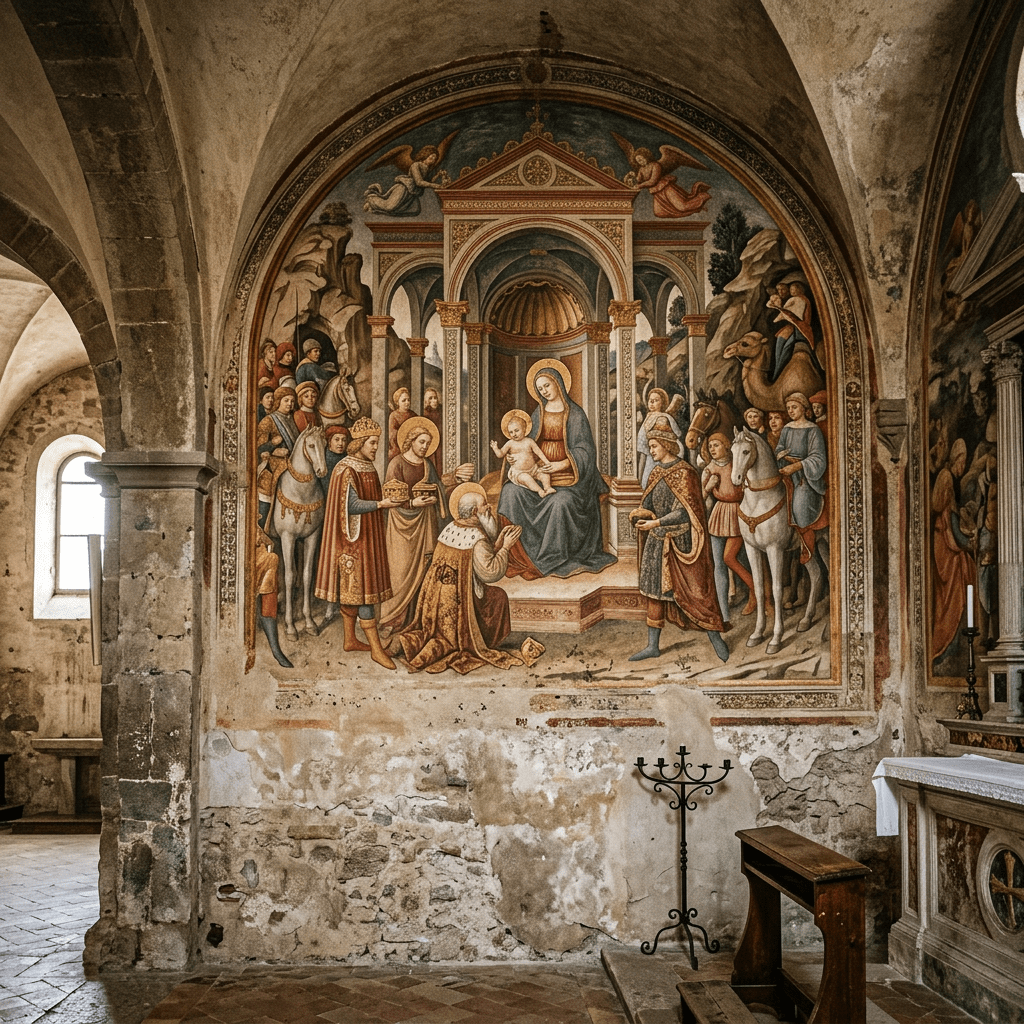
When fresco plaster cures, calcium hydroxide reacts with CO₂ in the air to form calcium carbonate, which is basically just limestone. This is why frescos are so durable since the pigment gets locked into actual stone as it hardens. The reaction pulls carbon dioxide out of the atmosphere because the calcium hydroxide is actively absorbing it to complete the process. It also kind of reverses what happened when the limestone was originally burned to make the lime in the first place, so there’s this interesting cycle going on.
The carbonation doesn’t just stop after a few days either. It keeps going for years as CO₂ slowly diffuses deeper into the plaster, and thicker walls can take decades to fully cure, meaning the plaster is sequestering carbon way longer than most people would expect.

