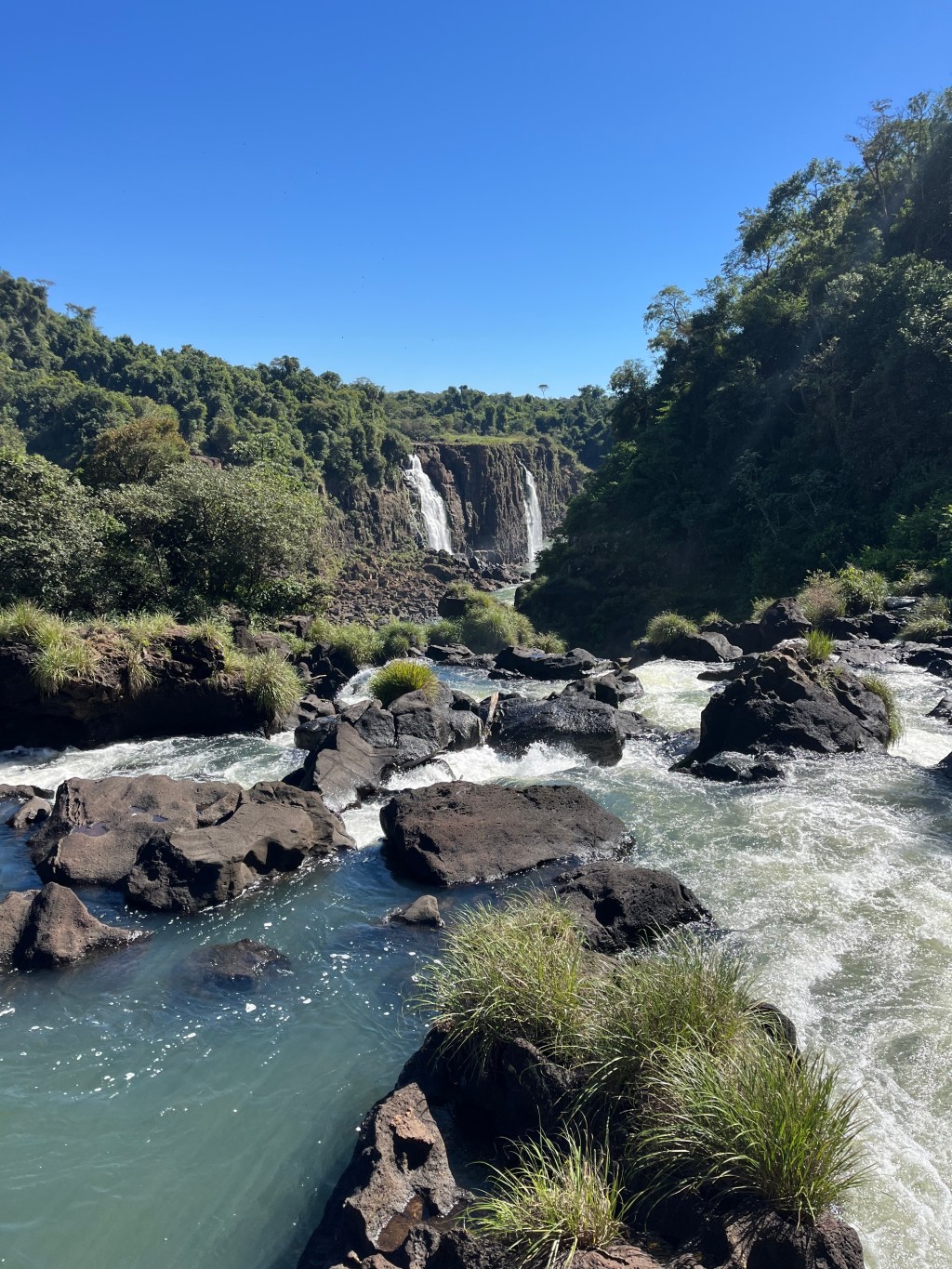
While I have have been mesmerized by natural wonders like the Cliffs of Moher and Niagara Falls, nothing in my life has quite compared to the natural beauty I witnessed at the Foz do Iguaçu. As the largest waterfall system in the world with over 275 unique different drops, it has inspired awe in visitors for centuries. While the falls have always been a tourist destination, the surrounding area has urbanized as of late and become a thriving city and a symbol of international cooperation
The Foz do Iguaçu region is uniquely situated at the border of Brazil, Argentina, and Paraguay. In addition to tourists entering the region every day, thousands of others also travel to the city to work, study, and collaborate. Thanks to the accessibility of each of these countries, international cooperation has flourished, resulting in marvels of industry and business. The best example of these manmade marvels is perhaps the Itaipu dam; the biggest hydroelectric power plant by output in the world, responsible for producing 90% of Paraguay’s and 15% of Brazil’s power.
While Foz do Iguaçu is certainly in an advantageous region for global partnerships, the success being recognized there is a result of intense labor and study. Foz do Iguaçu is home to UNILA, UNOESTE, UDC, and more highly-ranked national universities. Each of these universities is bilingual and provide unique professional experiences that help students integrate their talents directly in government, foreign relations, engineering, and research. We were fortunate enough to listen to a presentation from a trilingual intern working with the local government to manage cultural and tourism events.
The opportunity and innovation at the Foz do Iguaçu are just as impressive as the waterfalls. Leaders, engineers, scientists, and cultural giants are born in environments like the ones along this section of the Paraná river. While the Foz do Iguaçu was a much more tourist-friendly region than São Leopoldo, it was another unique look into a premier global destination for industry and foreign relations. While there is a lot of division around the globe during times like these, this region in Brazil shines as a beacon of what is possible with global cooperation.

