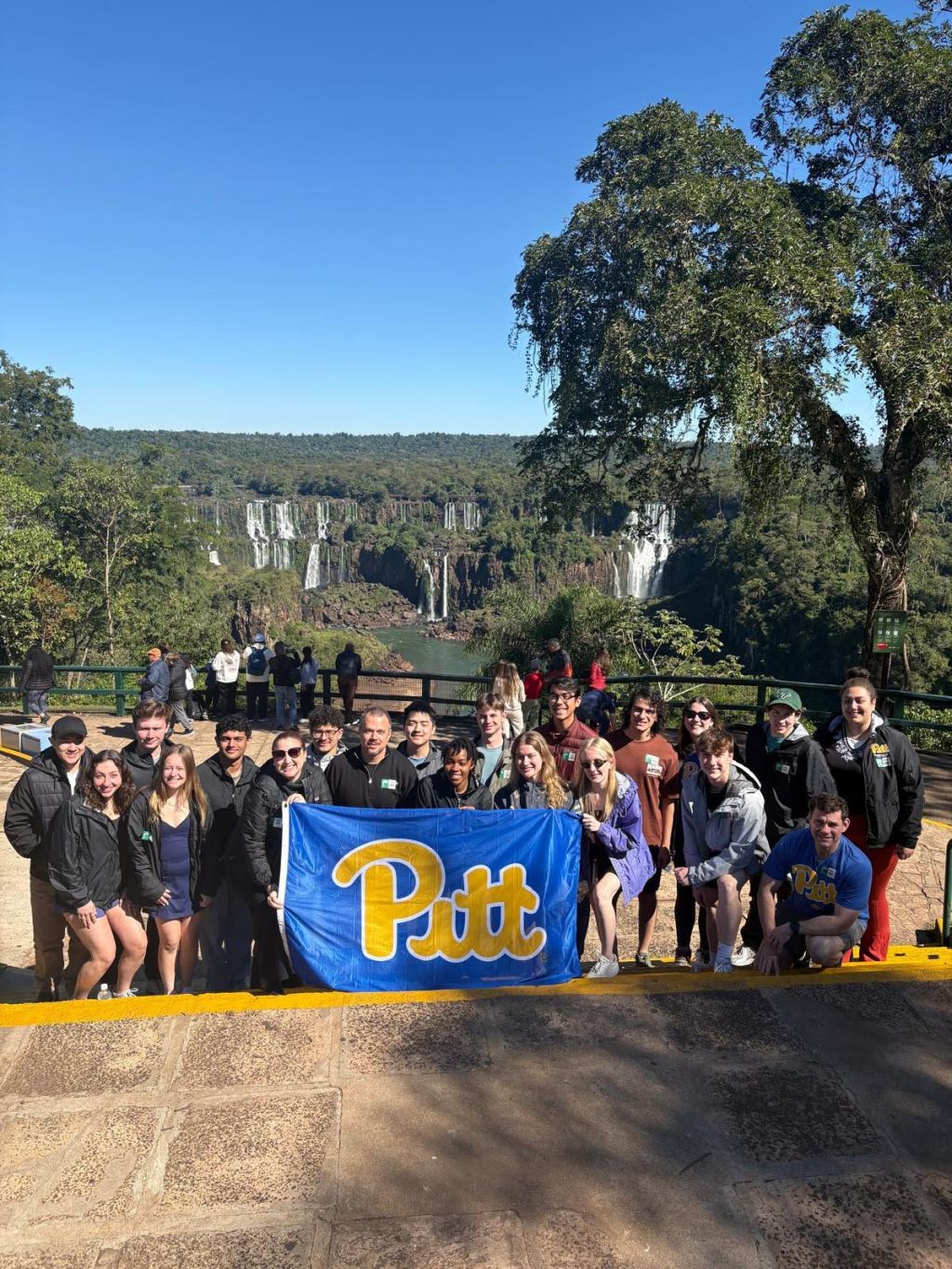
During our visit to Foz do Iguaçu, we got to experience what was arguably the highlight of the entire trip: Iguazu Falls and the surrounding rainforest. At the time of our visit, the river was flowing at a lower level because there had not been much recent rainfall, and the dam upstream was operating at a reduced output. As a result, we were able to enjoy the viewing platforms without getting completely soaked, which was a nice bonus. The falls themselves were still one of the most impressive natural sights I have ever seen. Having visited Niagara Falls before, I found Iguazu Falls to feel much more natural and immersive because of the dense rainforest and vegetation surrounding the waterfalls rather than a heavily developed urban environment. What surprised me most was the sheer size of the area. Instead of one massive waterfall, there were countless waterfalls spread throughout the landscape, making it feel impossible to take everything in from a single viewpoint. We also visited Parque das Aves, which gave us the opportunity to see tropical birds and wildlife up close while walking through large enclosures built directly into the forest. Seeing toucans, flamingos, and many other species as well as coatis and capybaras in such a natural setting made me appreciate just how unique and biodiverse this region of Brazil is. Together, these experiences reminded me of how important it is to preserve natural environments and how much there is to learn simply by experiencing them firsthand.
One of the most fascinating parts of our time in Foz do Iguaçu was visiting the Itaipu Dam, one of the largest hydroelectric power plants in the world. Before the trip, I knew Itaipu was an important source of electricity, but seeing its size in person completely blew me away. The scale of the dam was difficult to comprehend until we were standing on top of it looking across the massive structure. We were able to drive across the dam, view the transmission infrastructure, and even go inside the facility to see one of the enormous turbines operating. As someone interested in energy systems, it was exciting to see concepts that I have learned about in class applied on such a massive scale. I was especially interested in learning how the dam provides electricity to both Brazil and Paraguay and how it generates power at both 50 Hz and 60 Hz to accommodate the electrical standards of each country. Seeing such a large renewable energy project up close gave me a greater appreciation for the engineering, planning, and international cooperation required to keep critical infrastructure operating reliably.
Compared to São Leopoldo, Foz do Iguaçu felt much larger and far more centered around tourism, which created a very different atmosphere. Because the city sits near the borders of Brazil, Argentina, and Paraguay, there was a unique mix of cultures throughout the area. It was common to hear people switching between Portuguese, Spanish, and English, which made the city feel much more international than anywhere else we visited. Exploring the city helped me appreciate how connected the three countries are despite having different languages and cultures. Looking back, Foz do Iguaçu stood out because it combined so many different aspects of the trip into one place. Between the incredible natural scenery, the engineering achievement of Itaipu, and the blend of cultures found throughout the city, it felt like a place where nature, technology, and culture all came together in a way that I will not forget.

