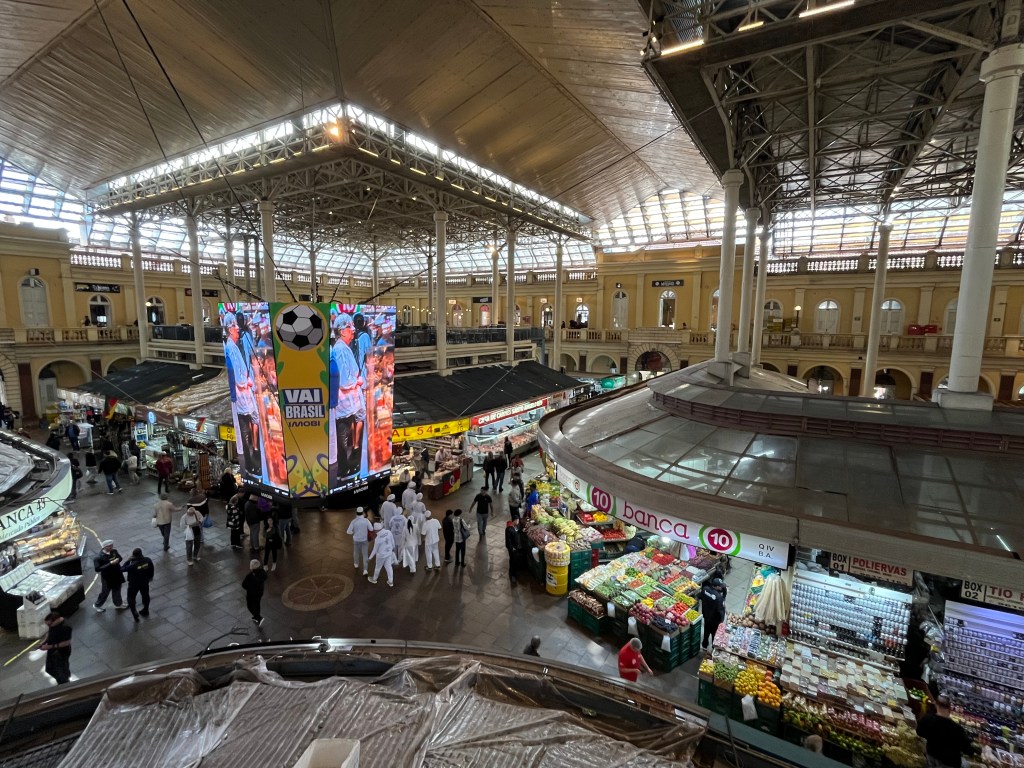
On July 25th, 1824, German immigrants founded São Leopoldo approximately 30 kilometers outside the capital of Rio Grande do Sul. While primarily recognized for its unique blend of Latin and European culture, it is also one of Brazil’s most prolific and productive technological hubs. During our time in São Leopoldo, we had the opportunity to see the forefront of Brazilian research and engineering and how its unique environment has paved the way for novel solutions.
São Leopoldo’s economy and industry are driven by Tecnosinos; an industrial park driven by Unisinos University. The university offers several unique programs for faculty and students to complete rotations at partnership companies that have established rotations on campus. These programs promote innovation centered on novel research conducted by both faculty and staff and promotes industry in a largely academic environment.
At companies like HT Micron, ITT Chip, and ITT Fuse, we had the opportunity to learn about how investments from Unisinos and the government help drive expansion and market presence. Similar to how Taiwan invested in semiconductor technology to boost its economic activity, Brazil is also making strides in moving away from its “developing” distinction through increased market presence in semiconductors and other technological industries. Despite great fluctuation in supply and demand, HT Micron now boasts a DDR5 memory design that was replicated by ST Microelectronics; proof that their designs are on-par with highly recognized European and American companies.
In addition to seeing Brazil’s path to development unfolding in real time, we had the opportunity to learn about and participate in unique Latin and European cultural events. The highlight of our cultural experiences was a Capoeira dance class led by the well known Mestre Delmar. This Afro-Brazilian martial art is both a mental and physical exercise that is extremely effective at promoting precision and focus to all participants.
I will always be grateful for the experiences that I had in São Leopoldo as it enhanced my global perspective of Brazilian life without many tourists or English speakers. Despite some extremely difficult challenges that Brazil faces, companies, universities, and organizations of all kinds are working towards solutions in technologically and culturally advanced areas like these.

